
When Proportion Rules (Even When It Breaks the Rule)
I’m a stickler for scale and proportion. Almost always, I want a side table to sit at or very near the height of the arm of the chair or sofa it accompanies. When those lines align, a room feels grounded and settled. It functions, too — reaching too far up or down to set a drink on your side table simply wouldn’t be comfortable.
But proportion is less about formulas and more about reading the form right in front of you.
In this room, I introduced two leather barrel-style club chairs. Their arms rise high and sweep into the back in one continuous curve. They are substantial and enveloping, rooted in traditional English club forms. If a table had met the height of those arms, it would have competed with the weight of the chairs and interrupted their silhouette, so I selected a shorter table — not because the “rule” didn’t apply, but because the rule had to yield to the form.
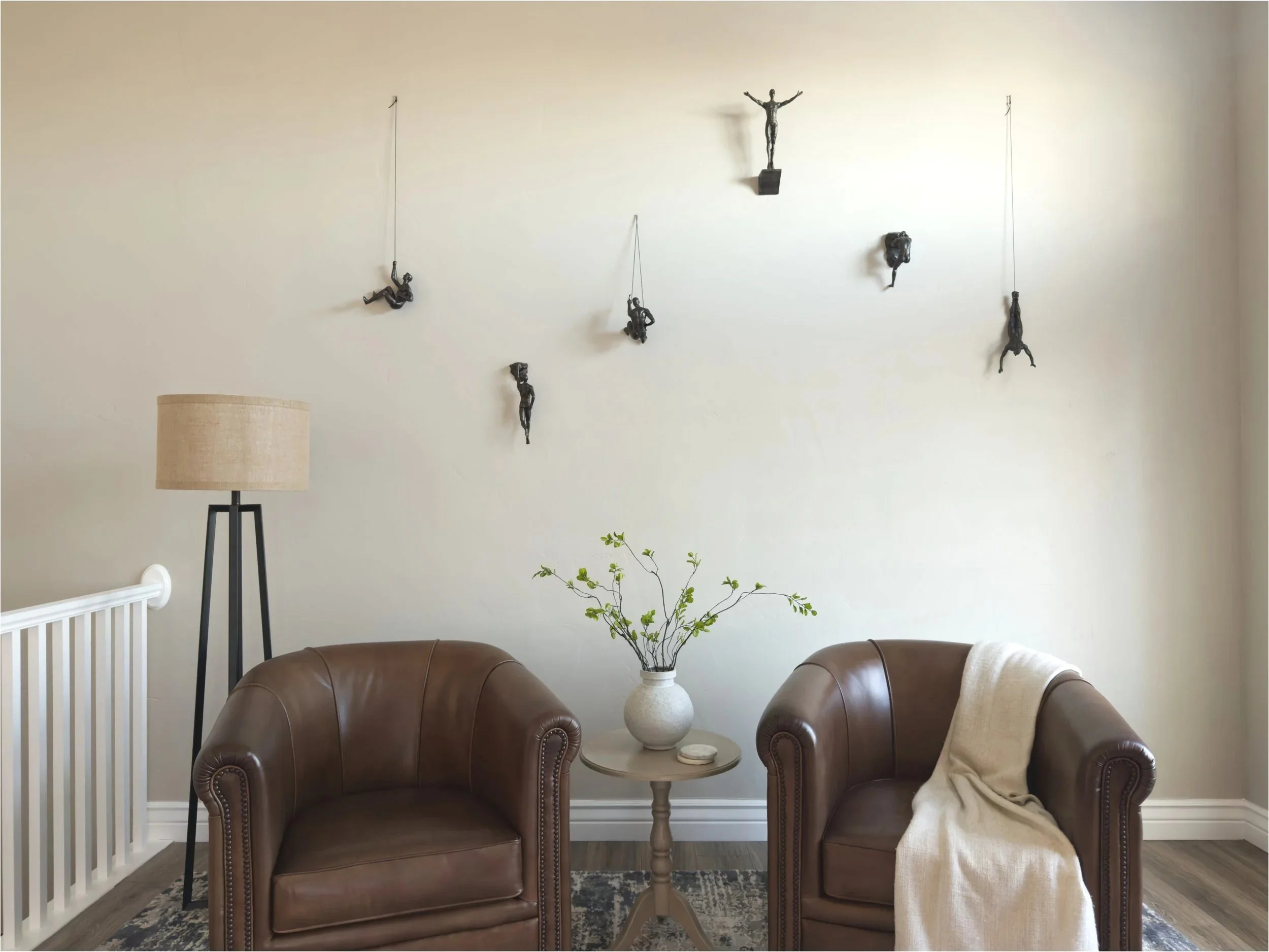
Two leather barrel-style club chairs styled with a short side table.
The smaller table respects the weight of the chairs instead of competing with it. The result feels balanced, even though the proportions break what would typically be my instinct.
Since the chairs swivel, the table can still function. I placed them with just enough room to clear the table and still sit comfortably. With the chairs angled slightly inward, the table becomes comfortable for setting a drink down while conversation can occur between two people facing one another.
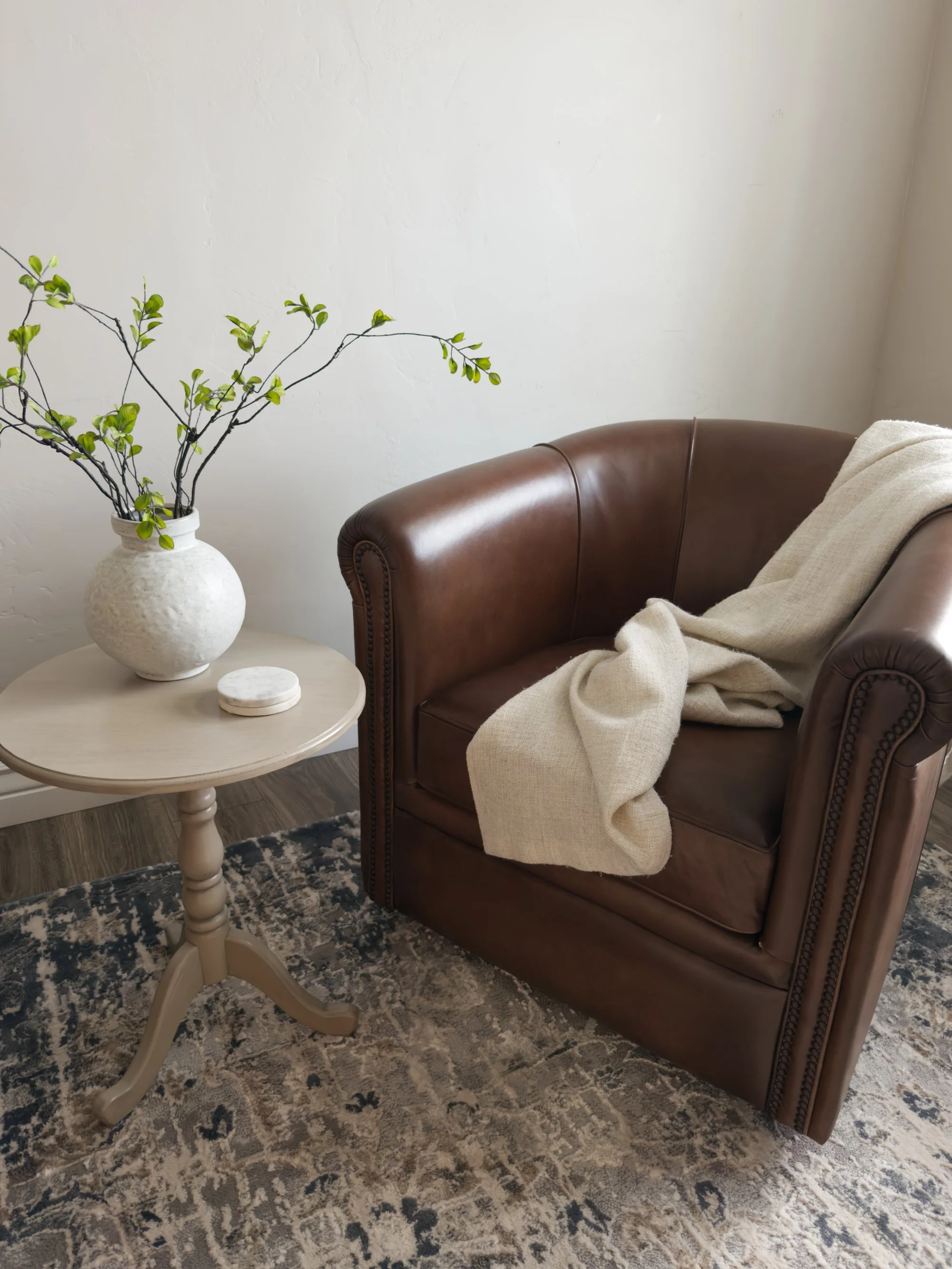
The chairs swivel-allowing for comfortable use of the side table and easy conversation.
While a coffee table could be added to the room, I opted not to in this case. The dog who lives in this home has discovered that the best views and afternoon light exist here — and he must be spoiled, because his bed would inevitably return to the space, right beneath the window. As such, a coffee table might impede access to the chair on the right.
This room wasn’t starting from scratch. The sculptural wall art already carried a more modern language that needed to be acknowledged. The floor lamp was selected to meet that art. Its base introduces a clean, contemporary line that speaks to the geometry on the wall, while the linen shade softens that gesture. The light is warm, not stark. It doesn’t challenge the leather. It complements it.
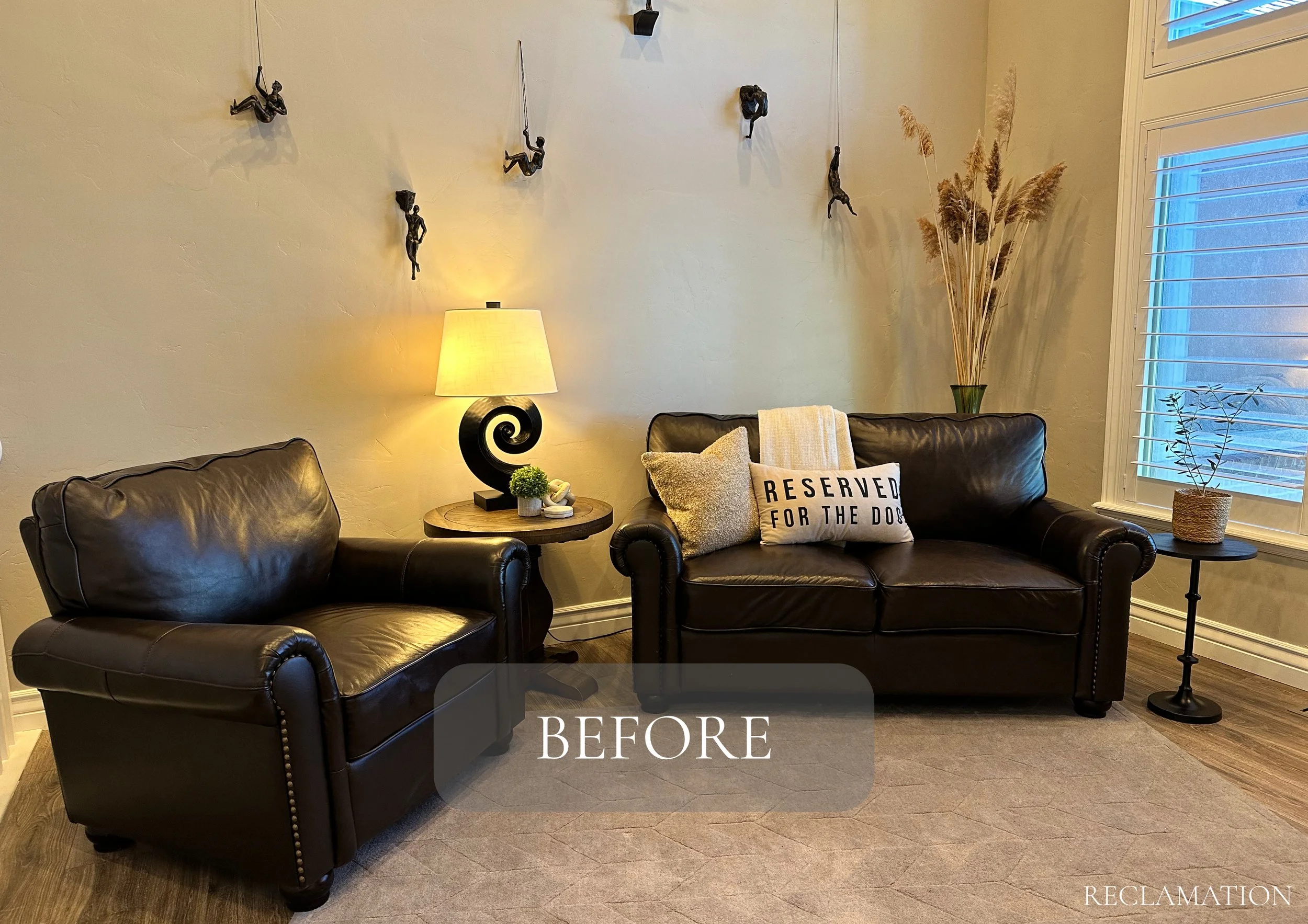
The room started with modern wall art and traditional leather seating.
The previous sofa and chair in this space had good bones. Their form was appreciated, but they had reached the end of their life. The goal for this project was refinement, not reinvention, so I chose new leather chairs of a similar form to bring longevity and warmth. Their rounded shape makes the seating area feel intimate and inviting. The room remains familiar — just elevated.
The modern lamp relates to the art, the soft shade bridges the gap, and the traditional table relates to the chairs. That relationship keeps the room from feeling divided between eras.
I added a ceramic vase to the table as a final finishing touch. Its shape draws from similar forms styled on shelving along a nearby wall. Repetition matters — when a form appears more than once in a room, it creates a subtle thread. Although most guests won’t consciously recognize repetition like this, they will certainly feel it.
The vase softens the leather and introduces movement against the strong geometry of the chairs and lamp. It connects this small sitting room to the rest of the space without drawing attention to itself.
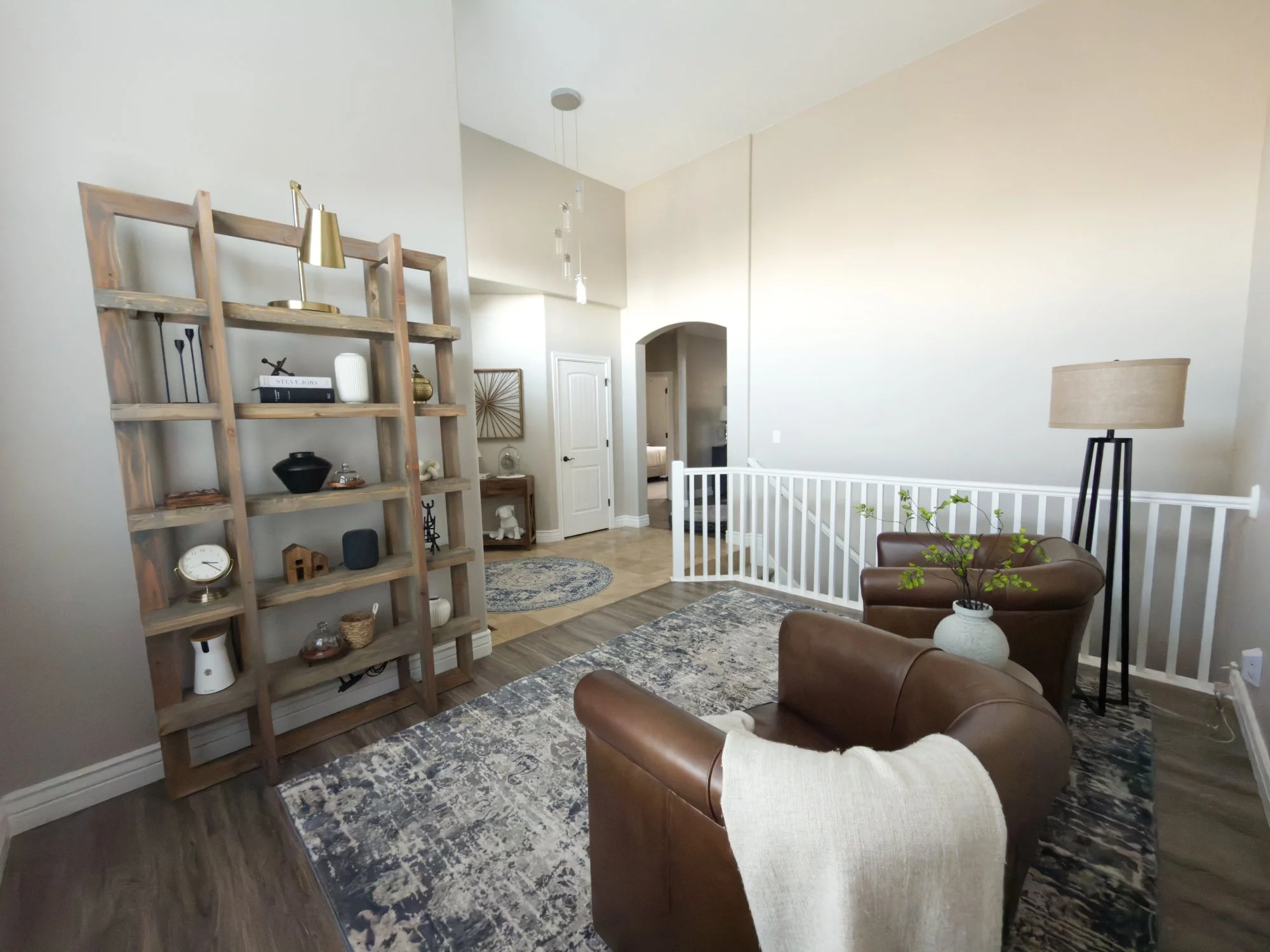
Repetition in a room creates a thread that helps a space feel finished.