
A Rustic Transitional Shelving Piece Styled with Modern Classical Restraint
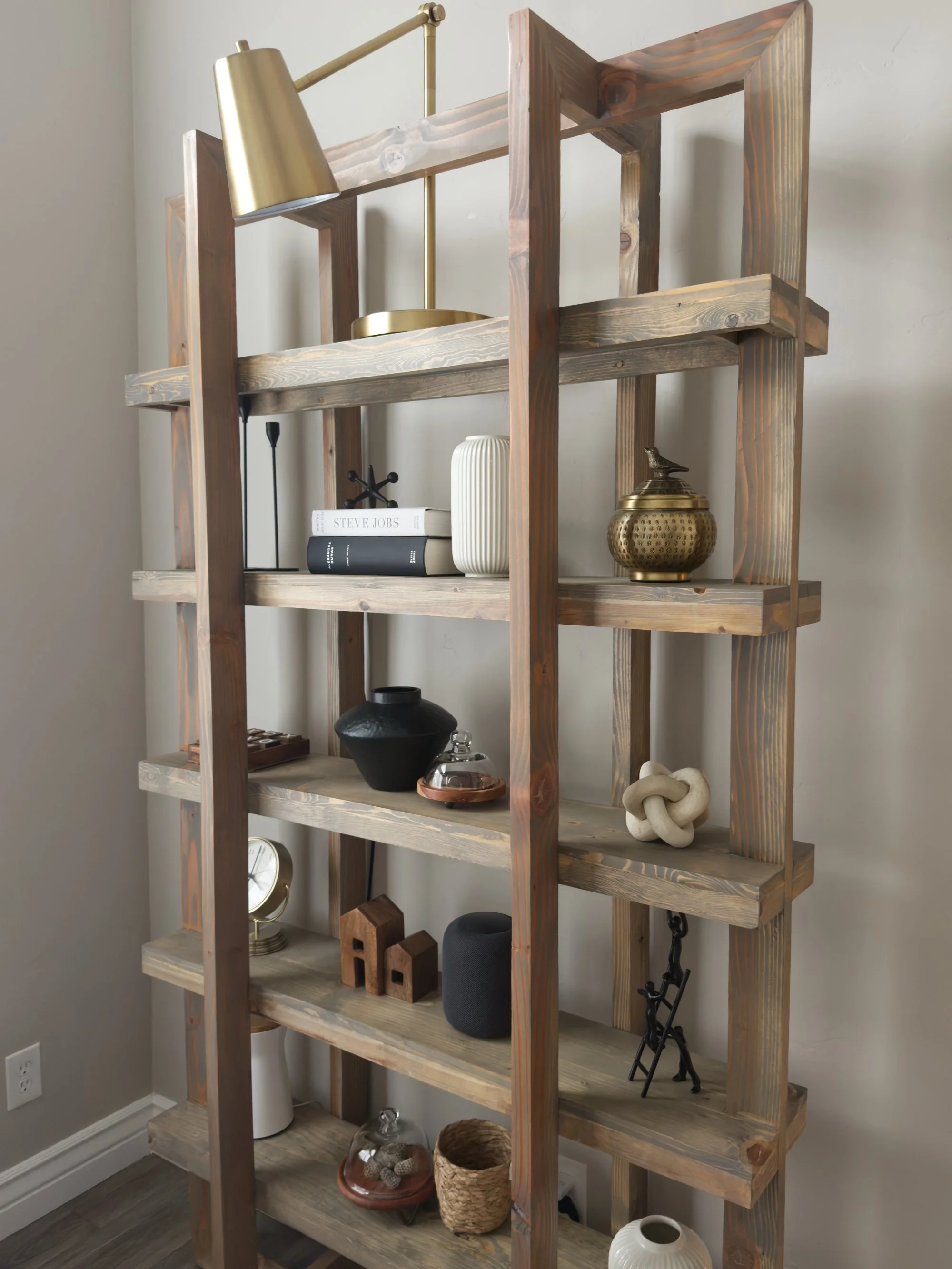
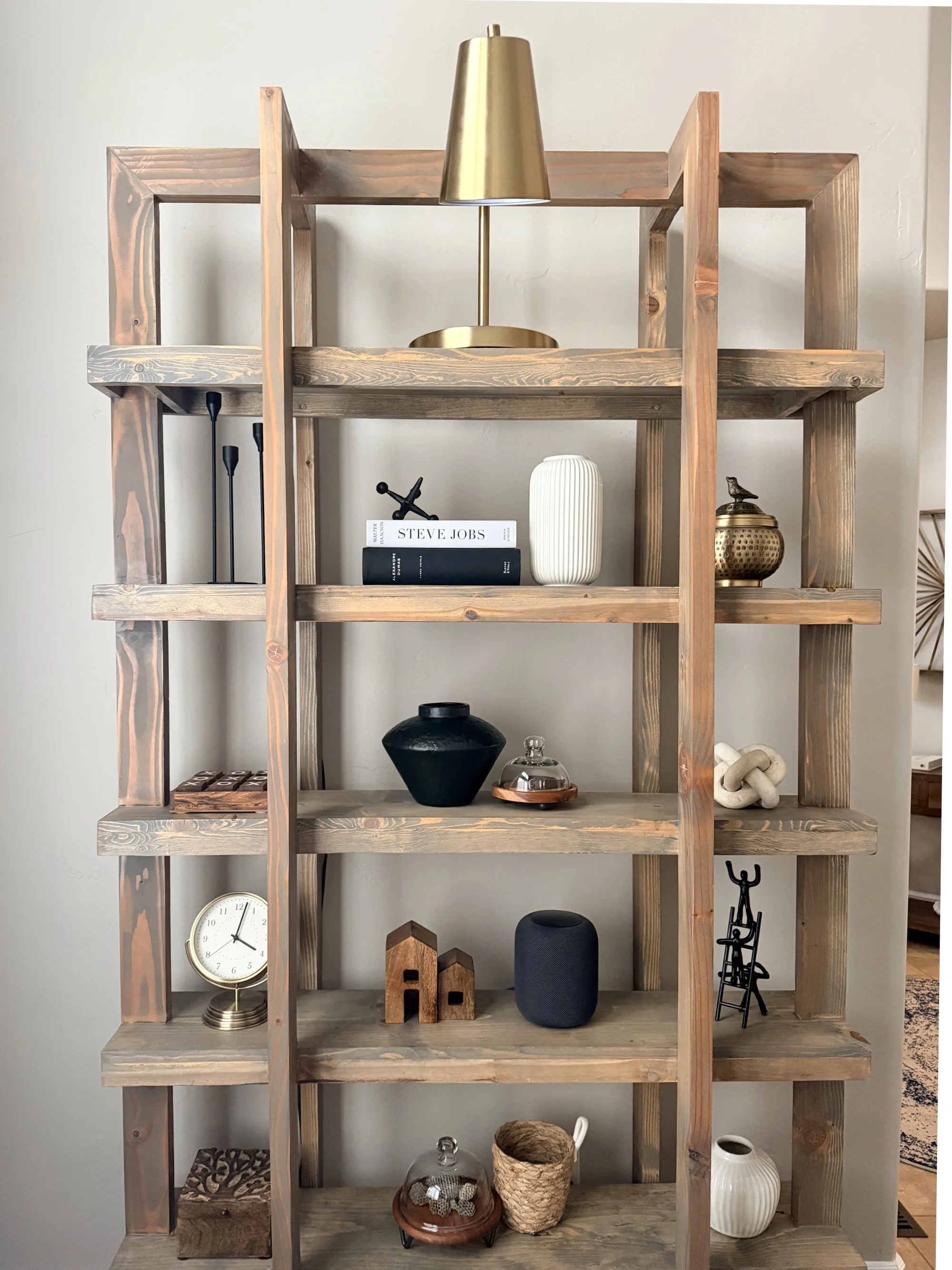
This custom shelving piece was built by hand. Living gently at the intersection of rustic history and modern minimalism, it breathes in clean, almost brutalist lines, and exhales warm, grey woodgrain. Positioned near a window in the sitting room of this home in Salt Lake City, Utah, it makes a quiet statement. It isn’t loud or flashy, but it also isn’t a painted built-in cabinet like those so commonly found in homes of this style.
Styling the piece presented a unique challenge. Not only because of the shelf’s unique design language, but because the vertical front rails create a visual obstruction for items placed behind them. This obstruction changes depending on where a person is standing. While shelving is meant to create interest, a guest’s eyes won’t always meet it straight on. In fact, the layout of the room causes the shelf to be viewed from the side more often than from the front. The task became an exercise in weaving modern and classical accents in a way that creates interest from any angle, drawing visitors further into the room.
Lighting, in my opinion, is a design requirement for most shelves—no, most rooms. We’ve heard it many times: overhead lighting is harsh. Lamps create calm, warm light that makes a space inviting while highlighting focal points. For a shelf like this, the lighting needed to be more direct, so a downlight shade was selected. While a similar fixture in black could have worked, a brass finish was chosen to add warmth and reflect light from the adjacent window during daylight hours. Its modern form respects the shelf’s clean geometry.
To solve the visual obstruction issue, a grid-like formation was planned. Two items are nestled together at the center of each shelf, with one item placed at either end. This ensures that most objects remain visible from the front while also creating interest from the side.
Knowing that a large black Apple HomePod would live on the shelf whether it was included in the design plan or not, it was intentionally incorporated. Its black finish was then repeated on other shelves to help it feel grounded. The HomePod connects to others throughout the house and serves as part of a whole-home music system. Located near the front door, it plays soft music to greet guests when entertaining. Technology is part of most homes, whether we like it or not, and attempting to hide it often makes it feel more intrusive. Here, the HomePod was placed confidently, with its cord carefully managed.
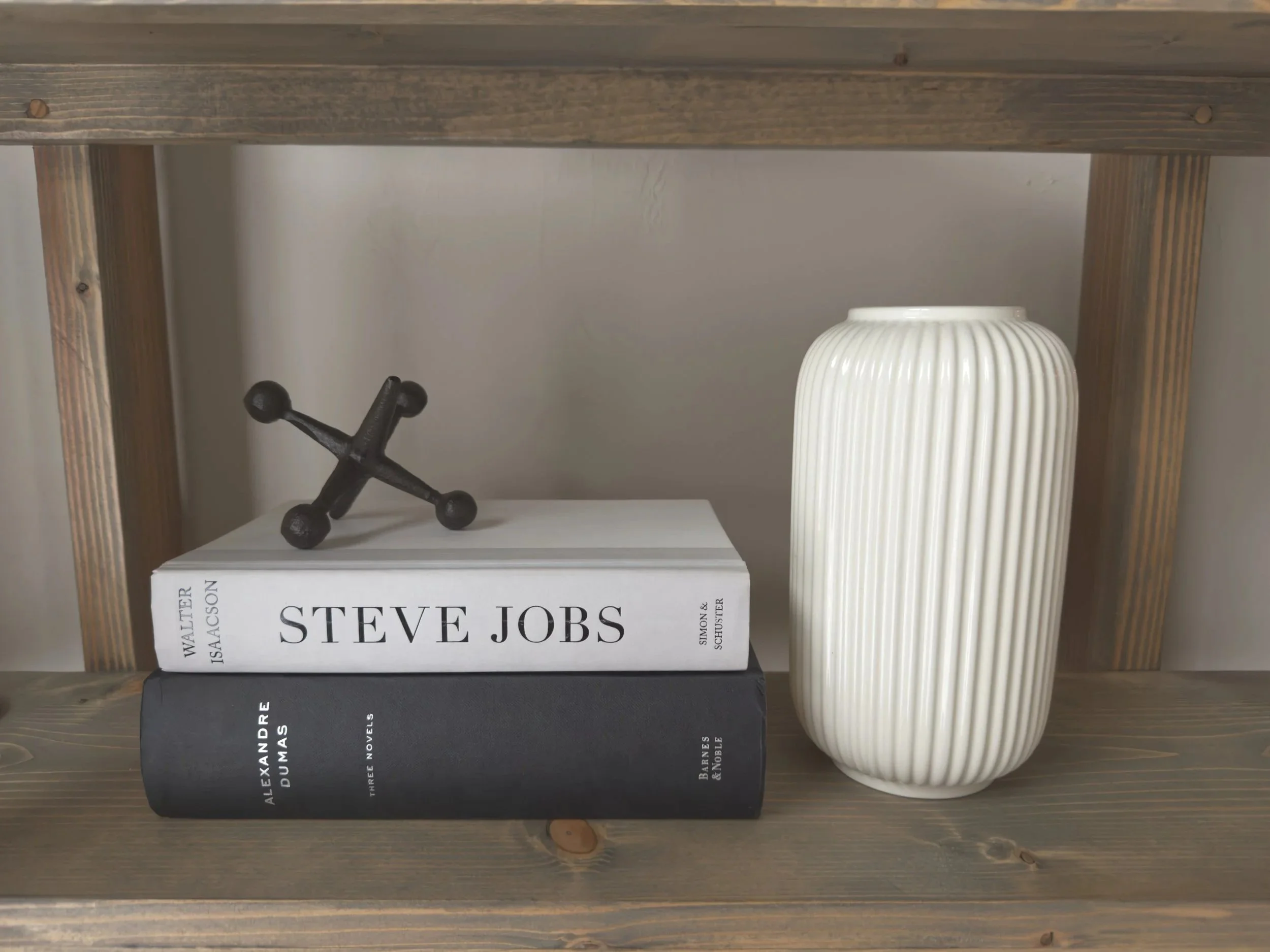
Several additional black pieces were selected: modern candlesticks, two abstract metal objects, and a stout, contemporary vase. To soften and balance these darker elements, a taller white vase and a light-colored marble knot were added. A small stack of books helps the shelf feel lived in, one black and one white, both reflecting the homeowner’s interests. Brass accents from the lamp are layered in. At this point, however, everything leaned modern. The objects respected the shelf’s form, but not its finish.
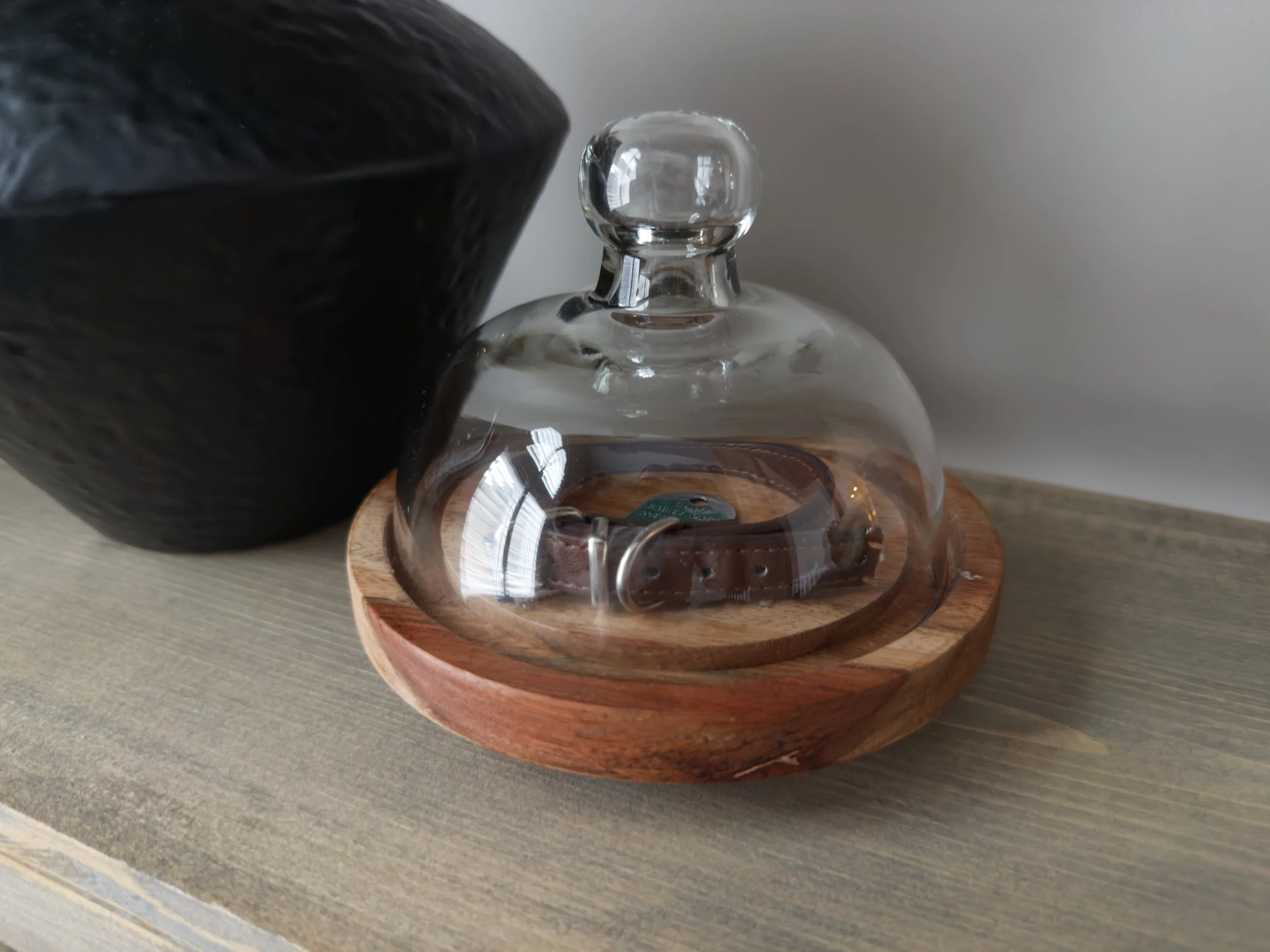
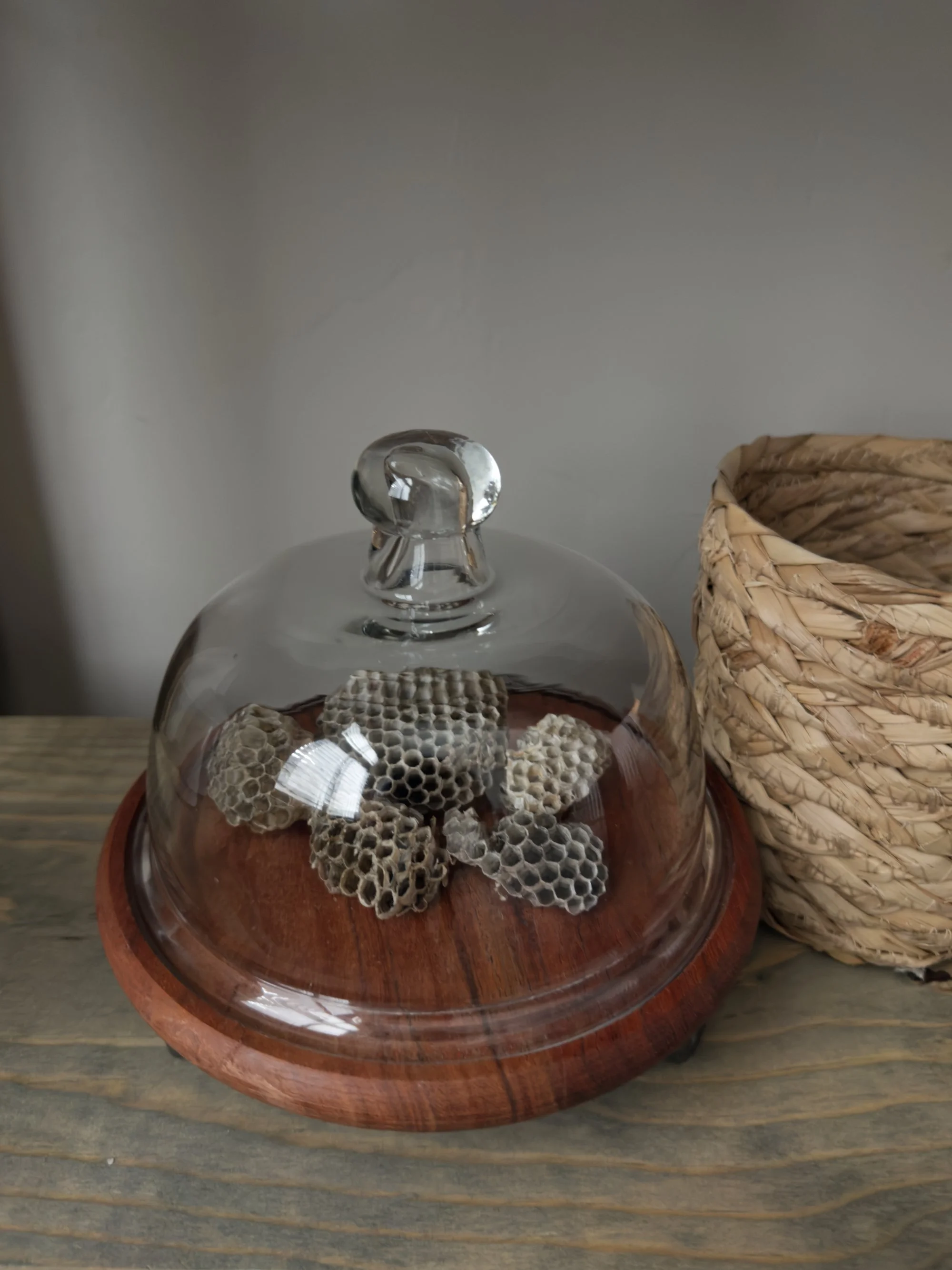
Natural wood elements would solve this. Perhaps the most interesting additions are the glass cloches. One contains wasp nests, bringing an organic element into the room. The other displays the resident dog’s first leather collar, long since outgrown. These pieces invite conversation, while the glass echoes the light-reflective qualities of the brass used elsewhere on the shelf.
Nothing is flashy. Nothing demands immediate attention. Yet each object contributes quiet interest. Together, these modern and rustic elements create a cohesive composition, feeling restrained, personal, and comfortably modern classical.