A Room Rooted in Family History
Some rooms don’t need to be completely reinvented — they simply need space to breathe.
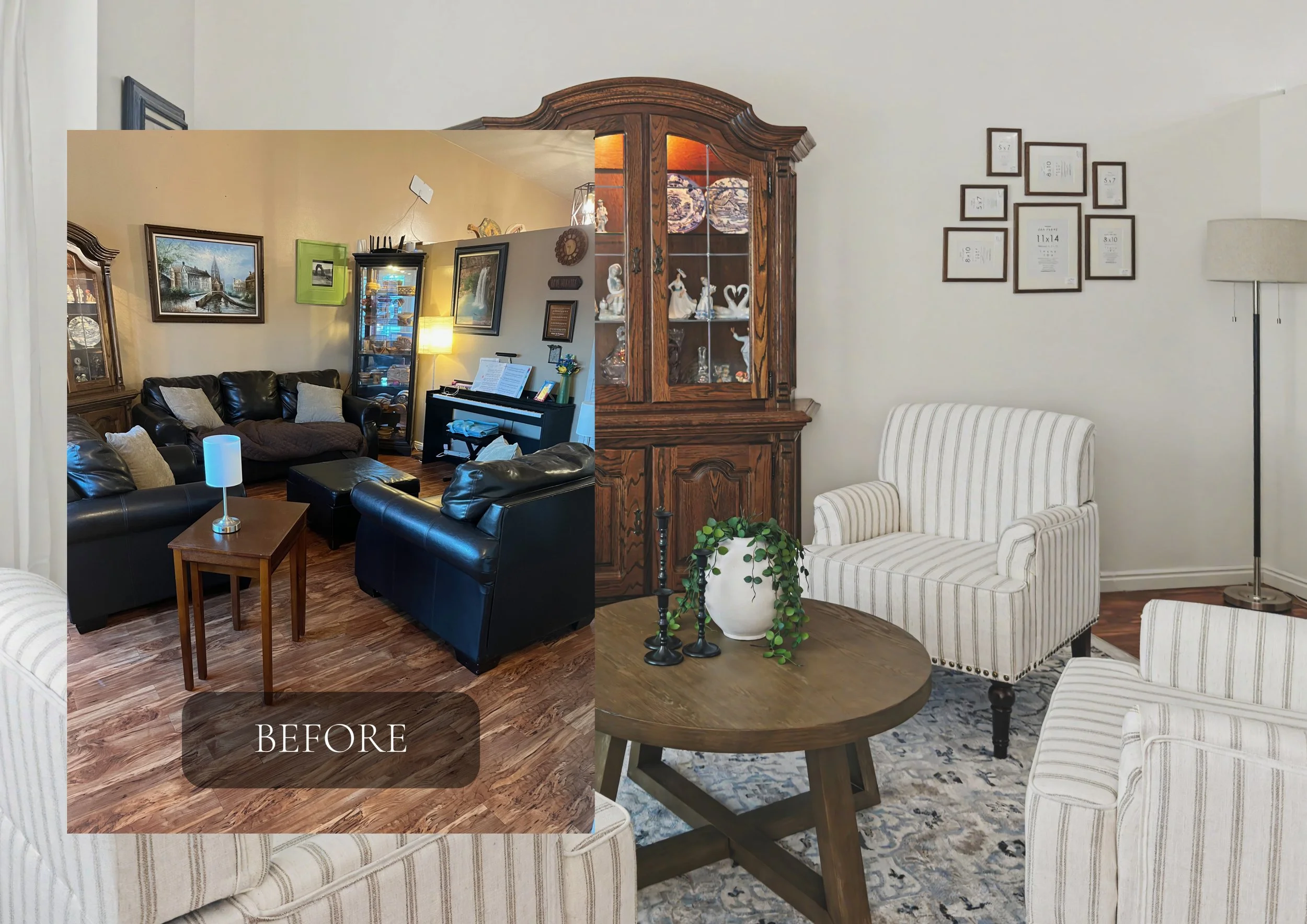
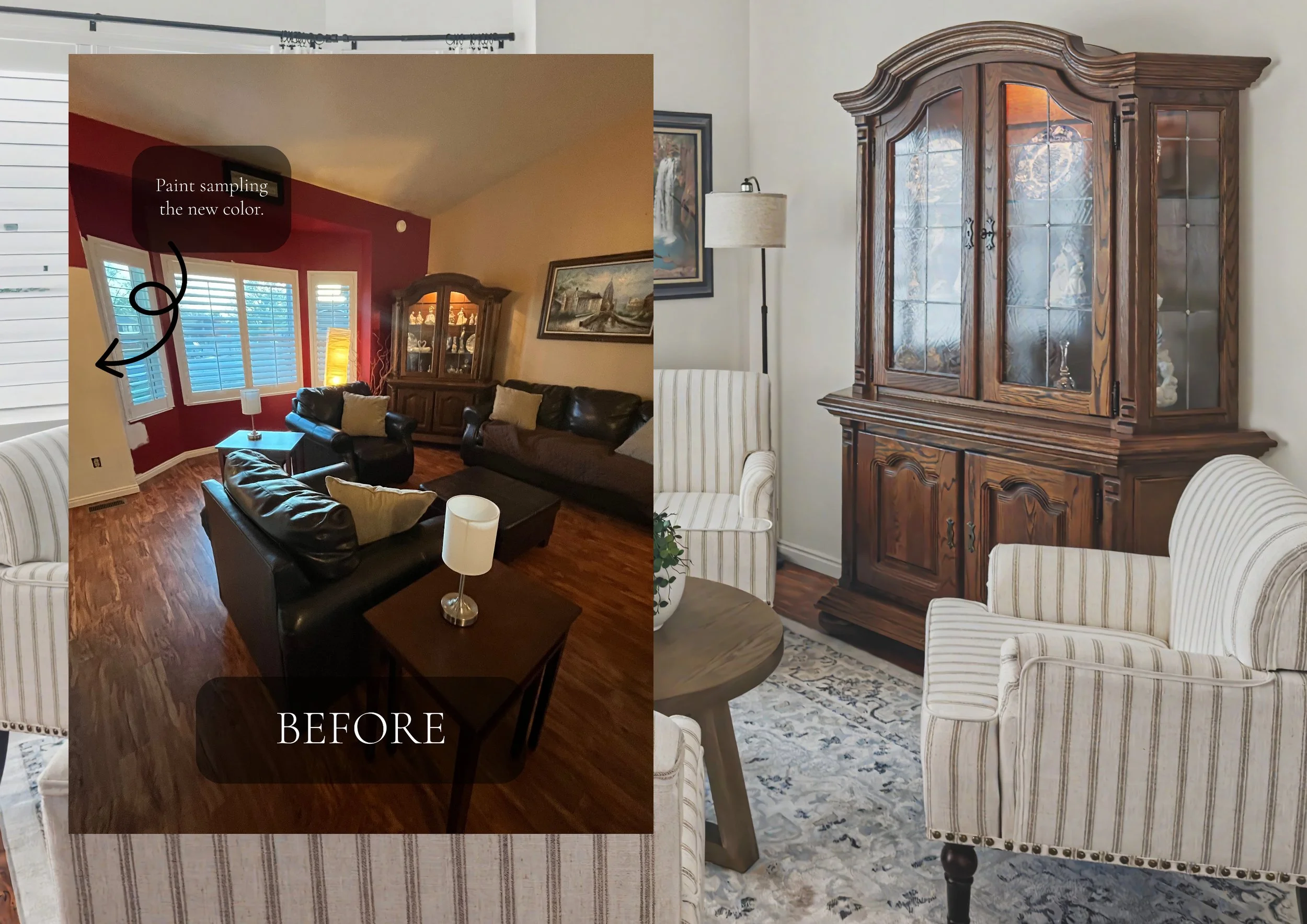
For this project, we transformed a dark and underutilized sitting room into a light, welcoming conversation space centered around pieces deeply connected to the homeowners’ family history.
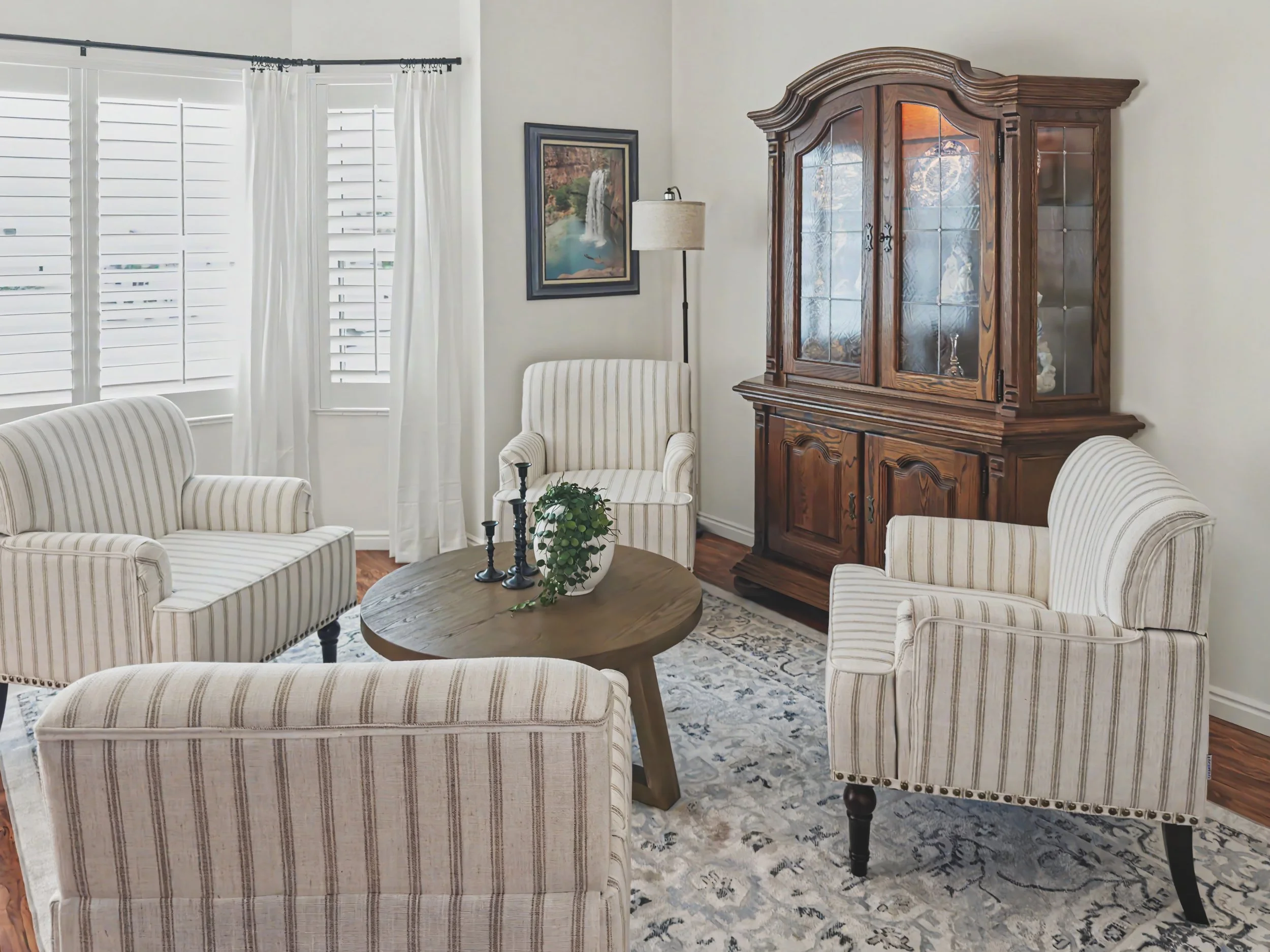
One of the most meaningful elements in the room was a china hutch originally belonging to the homeowners’ parents. Rather than replacing it, we chose to make it the focal point of the space. After painting the room in Sherwin-Williams Cotton White — one of my favorite warm whites because of its soft, balanced undertones across varying natural light conditions — the hutch suddenly felt timeless instead of heavy.
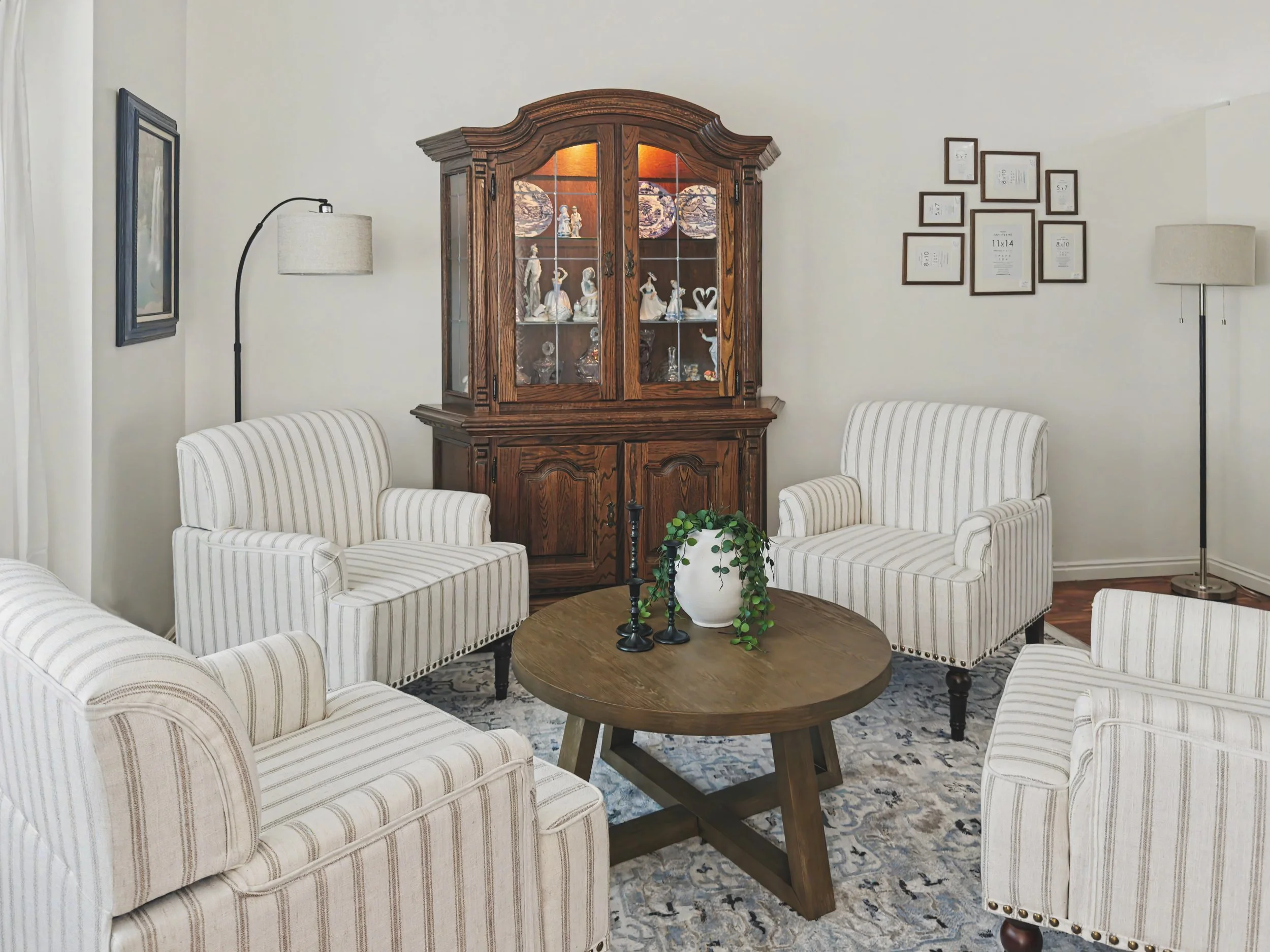
Instead of centering the hutch traditionally, I intentionally shifted it to elongate the focal wall while preserving room for another important family piece: a piano that has spent years in the family and was delivered shortly after installation was complete. When the homeowners later sent me a photo of the piano finally in place, it felt like the room had fully come together exactly as intended.
The original layout relied on a typical sofa-and-chair arrangement, but the room functioned far better with four armchairs gathered around a central coffee table. The new layout created easier traffic flow, a more intimate conversation area, and flexibility around the piano without overcrowding the room.
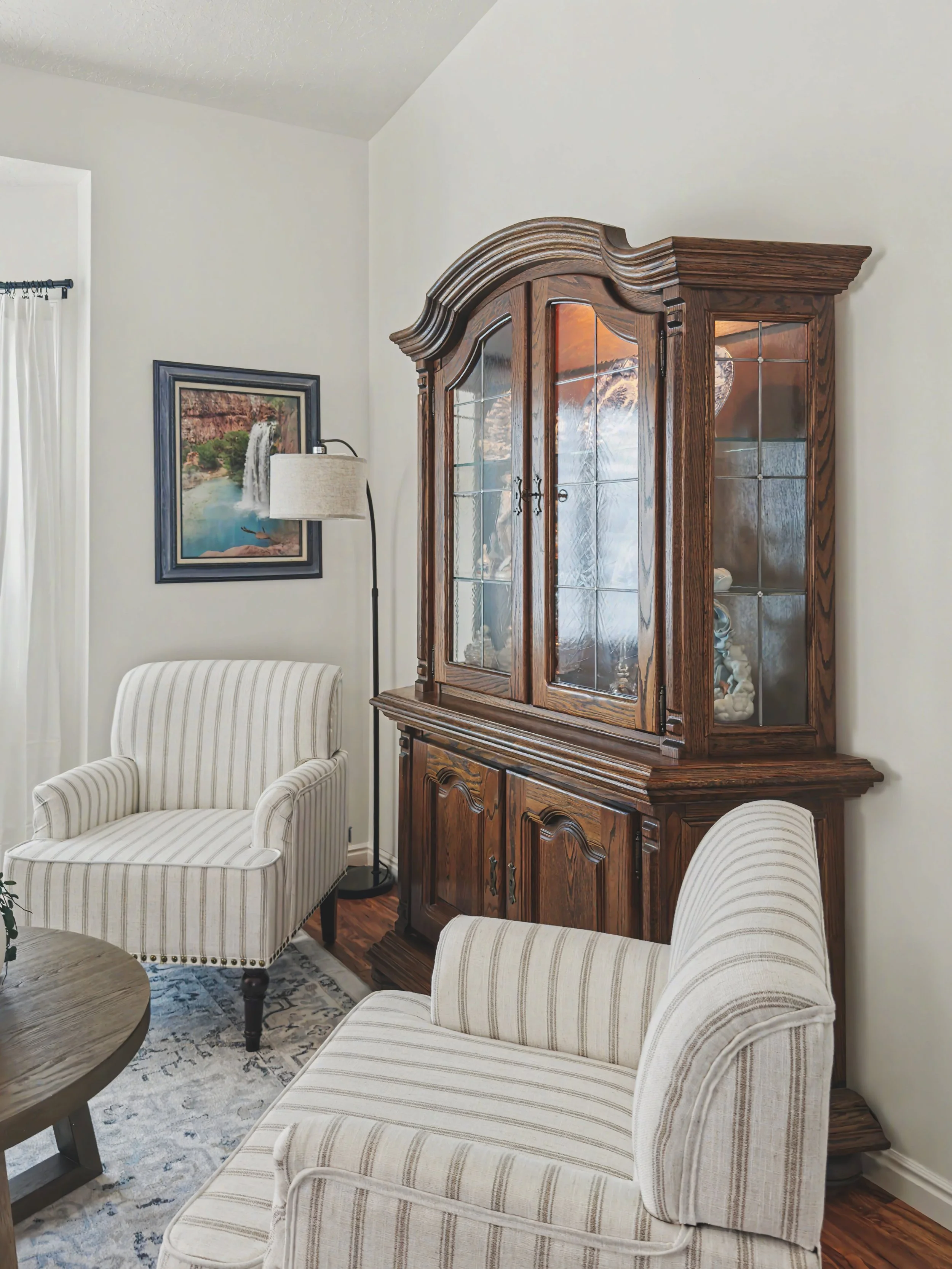
The homeowners also shared that the west-facing windows often made the room unusable during the afternoons because of the intense sunlight and heat. To soften the light while keeping the room bright and airy, we added light-filtering curtains that allow the space to remain comfortable throughout the day.
Several original art pieces were retained as well — including one from the homeowners’ parents’ home — and the blues found throughout the artwork and china became the inspiration for the rug selection. We landed on a muted, layered pattern that quietly ties the room together without competing with the history already present in the space.
One detail I especially loved was the gallery wall. I often prefer collected, varied frames for family displays, but in this room I intentionally broke that “rule.” Because the piano, artwork, and china hutch already carried so much beautiful detail, consistent frames helped keep the space feeling calm and cohesive. The plan is for those frames to eventually hold family memories, while several handmade woodworking pieces created by the homeowner over the years will also be layered into the room — adding even more personal history and craftsmanship to the space.
In the end, this room became more than simply a redesign. It became a gathering place for generations of memories — blending inherited furniture, meaningful artwork, family craftsmanship, and updated furnishings into a space that finally feels both functional and deeply personal.
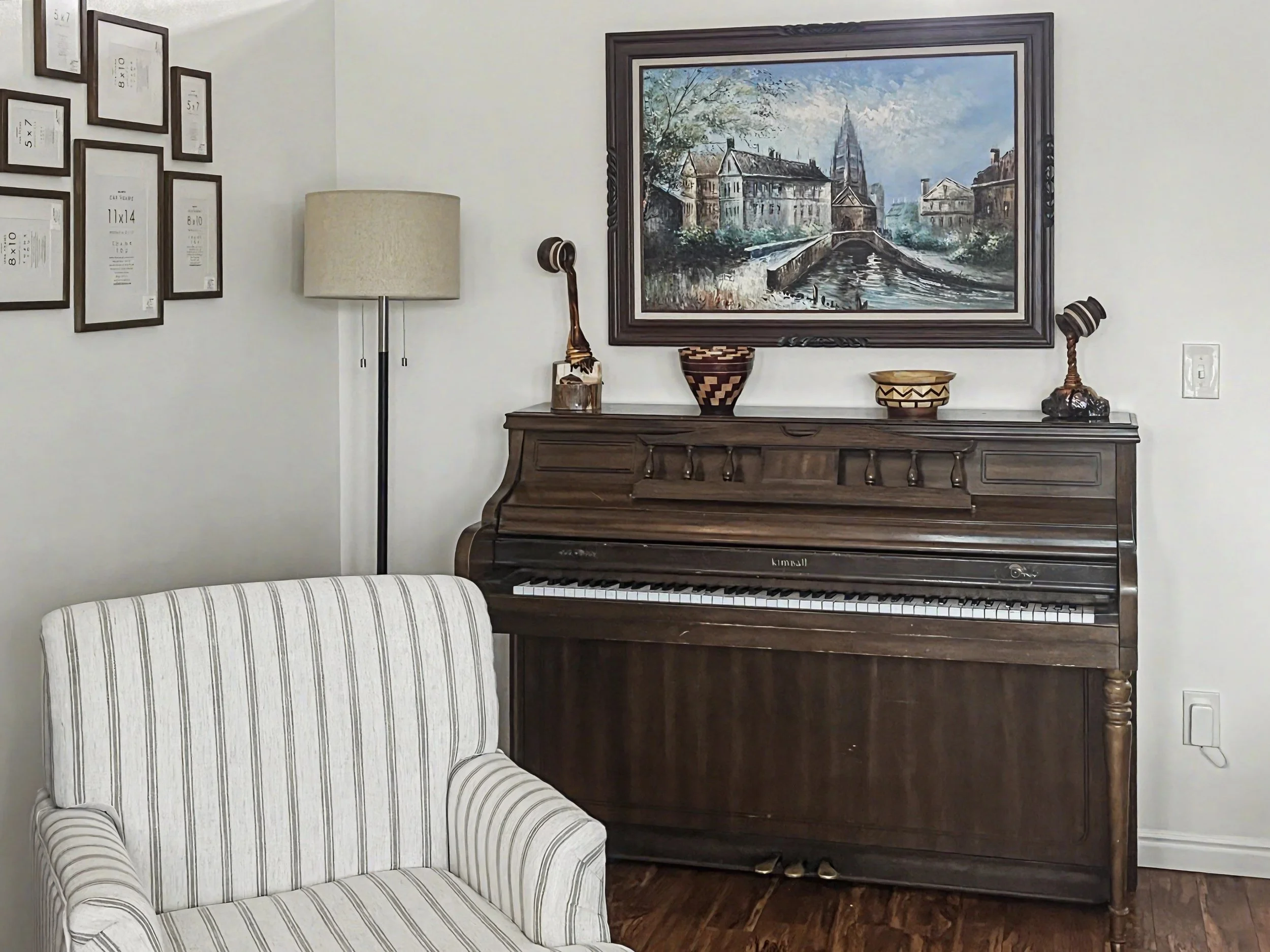
The week after installation, the homeowner shared a picture of the historic piano after delivery and told me “It really is amazing how a beautiful room can make you feel happy!” Honestly, I couldn’t ask for a better reminder of why thoughtful design matters. As her husband is a talented woodworker, the plans called to adorn it with some of their favorite pieces he had hand crafted.