
An unexpected wall of drapery, layered lighting, and a few collected treasures transformed our basement into a warm, inviting retreat.
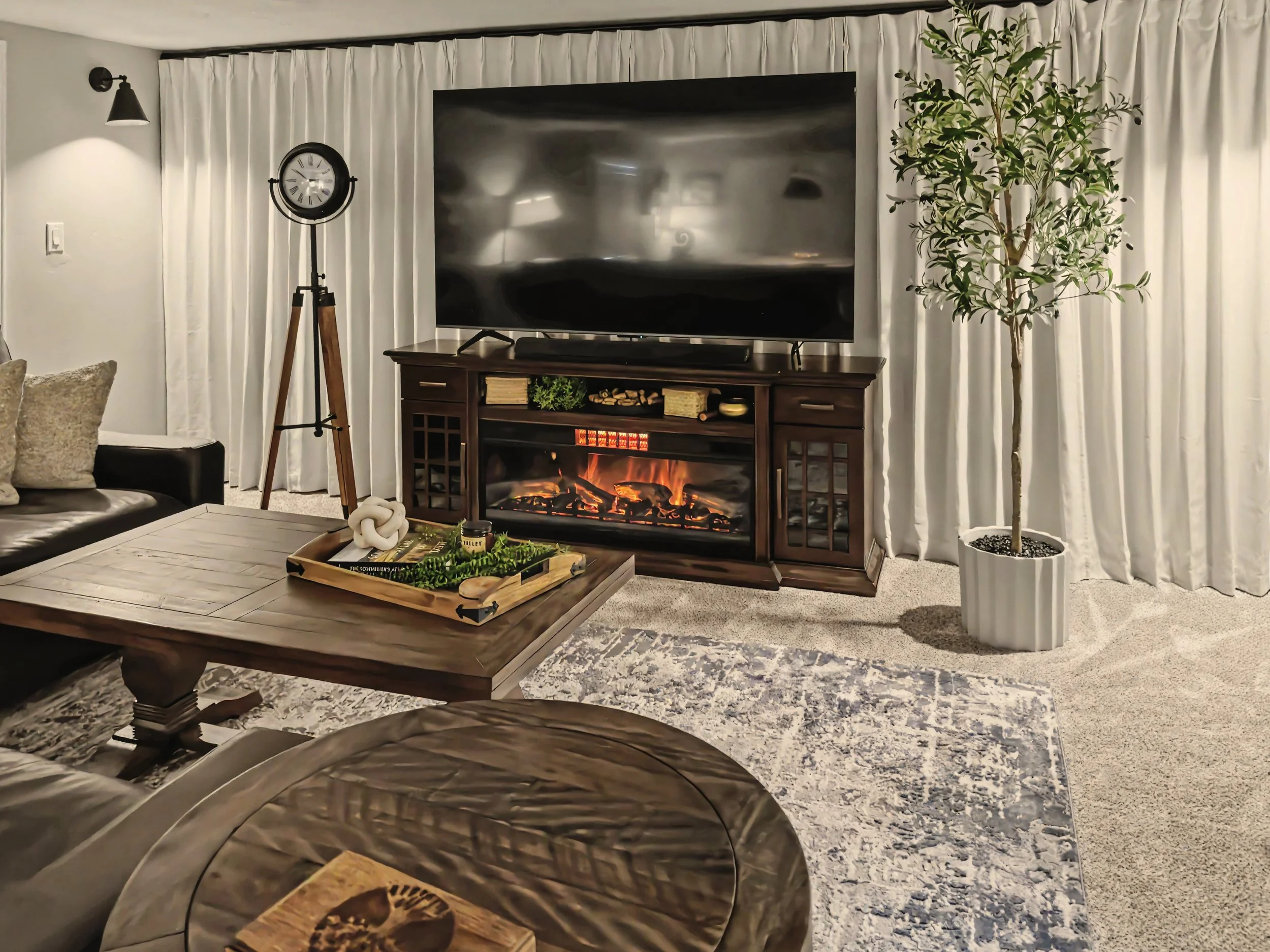
Our basement has become one of my favorite spaces in our home. It's where we settle in for a quiet evening, and sometimes entertain friends. I wanted it to feel comfortable and inviting, but also a little unexpected. Somewhere with the relaxed sophistication of a Napa Valley lounge.
We love Napa Valley. We first visited in July 2022. The wineries, architecture, and the way so many of its spaces balance rustic materials with contemporary details have always appealed to us. I wanted to bring a little of that feeling home without attempting to recreate a winery in our basement.
The result is a space that combines substantial wood furniture, soft textiles, warm lighting, and a few pieces collected over the years. And, perhaps most importantly, one rather unconventional design decision that changed the entire room.
Starting With What We Had
The existing walls were already painted a fairly neutral color, and I spent quite a bit of time considering whether to introduce something richer.
Entertaining several possibilities, I sampled several deep greens and also considered reusing Iron Ore, a moody charcoal we have in an adjacent theatre room, but none of that ever felt right. The more I thought about the atmosphere I wanted, the more I realized the existing neutral walls were actually working in our favor.
Much of the inspiration I was drawing from relied on natural materials, comfortable furnishings, and warm, atmospheric lighting. I wanted the space to feel relaxed and collected, with enough contrast to keep it interesting.
So the walls stayed.
Instead, I concentrated on introducing depth through furniture, texture, and lighting.
The substantial wood bar, leather sectional, and rustic coffee table establish much of the room's character. Their darker finishes give the space a sense of warmth and permanence, while the lighter textiles, patterned rug, and greenery keep everything from feeling too heavy.
The Wall That Changed Everything
The television wall was easily the biggest design challenge.
The obvious solution would have been built-ins. I considered them. A wall of cabinetry and shelving could have framed the television, provided additional storage, and created a more architectural focal point.
But the idea never felt right for this room.
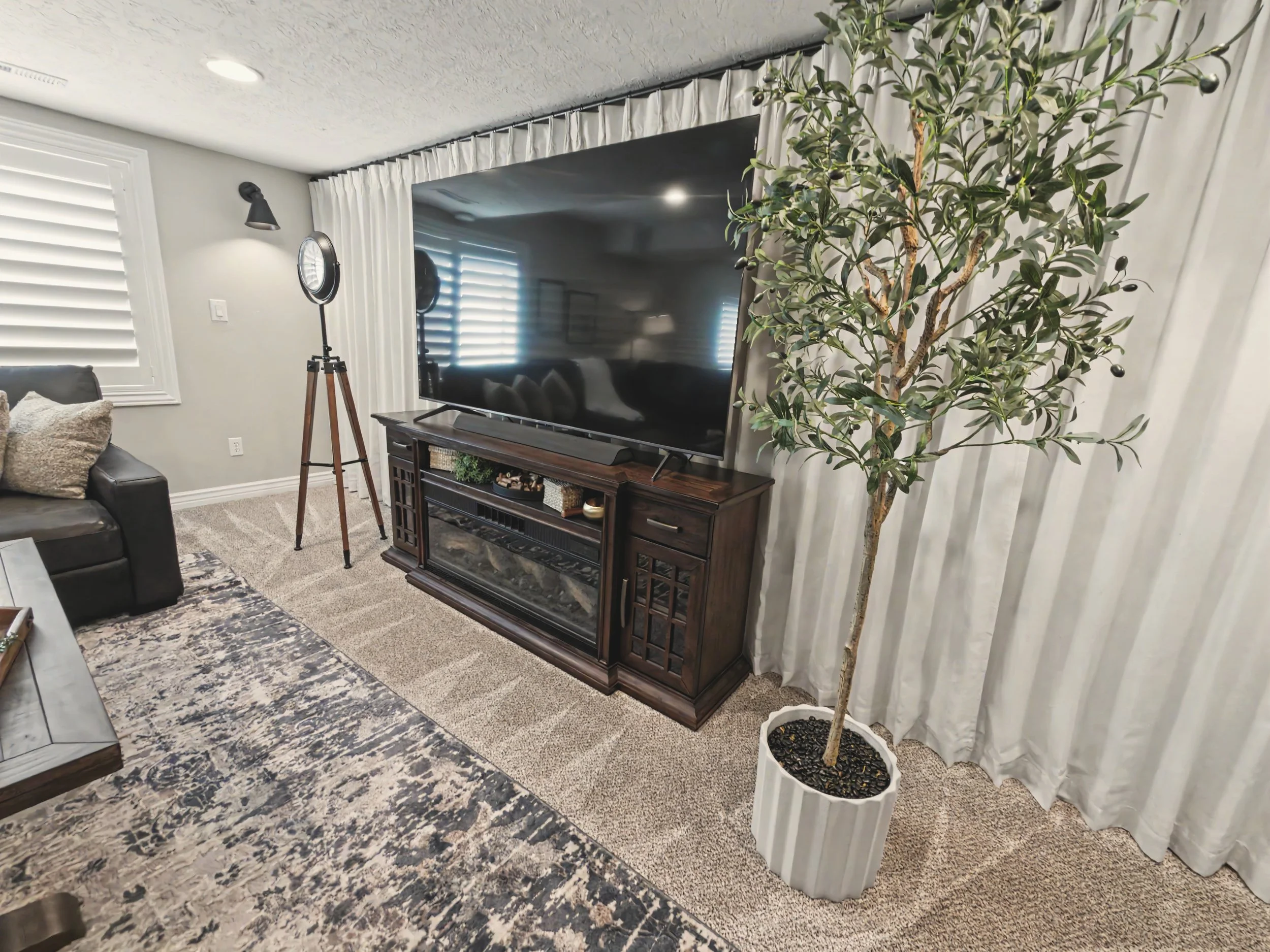
We already had a large electric fireplace console, and while I don't particularly love the idea of building a room around an electric fireplace, I also wasn't interested in replacing a perfectly functional piece of furniture just for the sake of redesigning the space. For the time being, I wanted to direct budget at other parts of our home.
Further, between the substantial bar and the large leather sectional, we already had plenty of visual weight. Adding a wall of cabinetry would have introduced another large, rigid element into a space that I wanted to feel soft and inviting.
I wanted something with a little more movement. Something that would introduce texture on a large scale without competing with the existing furniture.
So I went a little rogue.
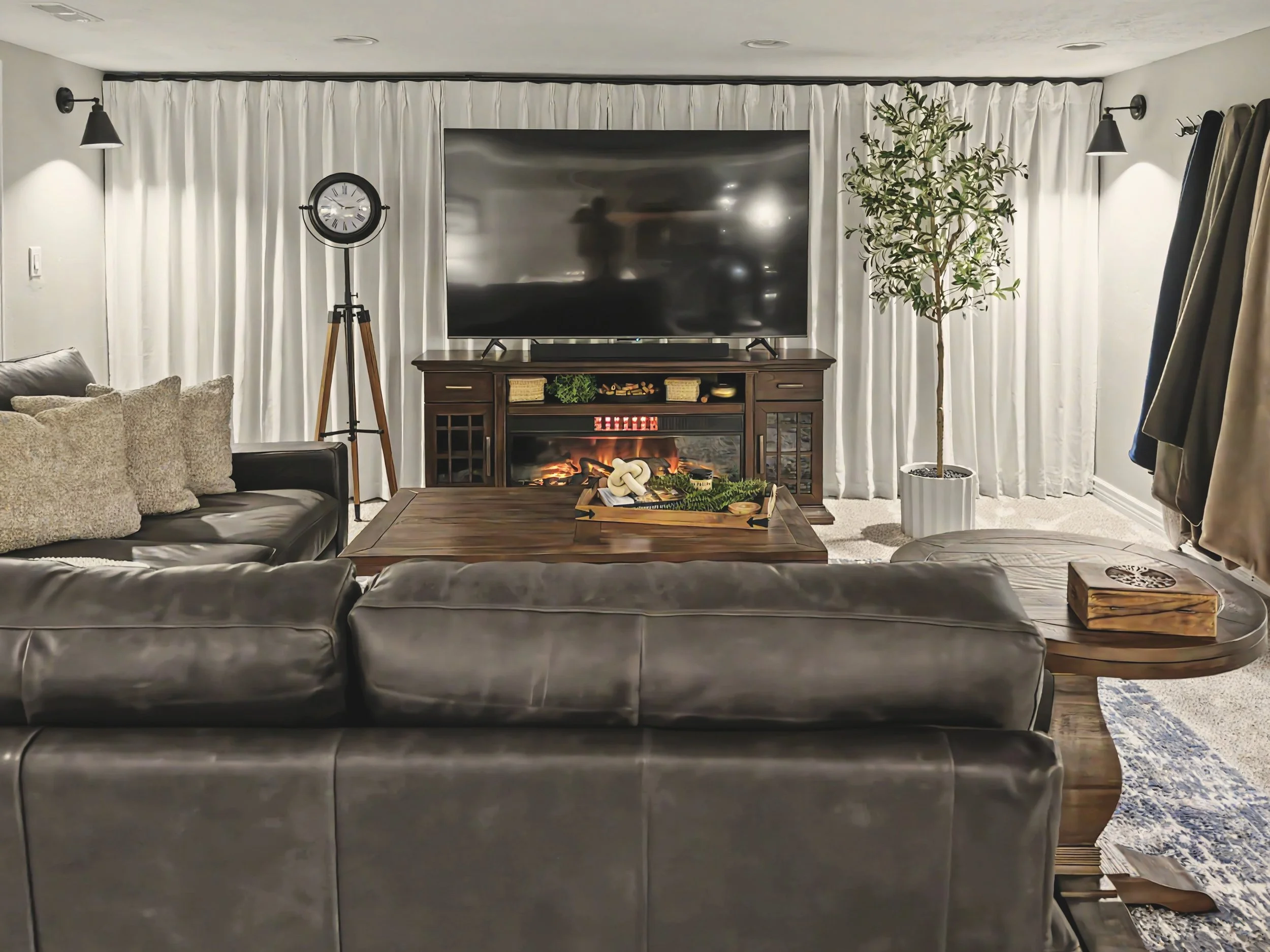
I decided to cover the entire wall in drapery.
Not just around a window and certainly not as a conventional window treatment. I wanted curtains stretching from one end of the wall to the other, floor to ceiling, creating a continuous backdrop behind the television and fireplace.
The transformation was immediate. Well, after steaming the ever loving hell out of the drapery, the transformation was immediate.
The drapes introduced softness to a room filled with relatively substantial furniture. Their vertical folds draw the eye upward, while the light fabric contrasts beautifully with the dark wood, leather, and black metal accents.
It also gives the wall a sense of depth that ordinary painted drywall couldn't accomplish. Because the fabric extends across the entire wall, it reads almost as an architectural finish rather than a traditional curtain installation.
A Small Change of Plans
My original instinct was to use a ceiling-mounted drapery track.
That would have allowed the fabric to fall directly from the ceiling, creating a true floor-to-ceiling installation with virtually no visible hardware.
There was just one problem: the dimensions.
To achieve the exact length I needed, I would have had to order custom drapery. While custom window treatments are often worth the investment, I wasn't convinced the additional expense was necessary for this particular application.
I found a more affordable ready-made option that offered the look and fullness I wanted, but the panels were a little shorter than the ceiling height.
Rather than abandon the idea, I adjusted the installation.
I mounted a black drapery rod very close to the ceiling, allowing the panels to fall to the floor while leaving just a little of the hardware visible. I considered adding a cornice board, but once everything was installed and I could see the rod above the drapery, I realized I actually love that detail.
The slim black rod creates a deliberate horizontal line across the wall and repeats the black finishes used elsewhere in the room, including the wall sconces, clock, and other metal accents.
What began as a practical adjustment ended up contributing to the overall design.
It's a good reminder that a design doesn't necessarily suffer when the original plan changes. In this case, the more economical solution gave me a detail I might otherwise have overlooked.
Lighting Makes the Room
If there's one element I consistently prioritize in interior design, it's lighting. In this basement, lighting is responsible for much of the atmosphere.
The two black wall sconces flanking the drapery wall are particularly important. A remnant of a prior design that was adjusted when another part of the basement was finished the prior year and the art beneath them was moved, they cast warm pools of light onto the surrounding walls and across the fabric, emphasizing its folds and creating subtle variations in shadow. The drapery helped the sconces make sense again.
Without that lighting, the drapery would still soften the room, but it wouldn't have quite the same dimensional quality.
I also installed lighting behind the television, which creates a gentle glow against the fabric. When we're watching a movie in the evening, that indirect illumination adds another layer of warmth without requiring the overhead lights.
Throughout the rest of the basement, I've incorporated smaller sources of light to create a comfortable atmosphere.
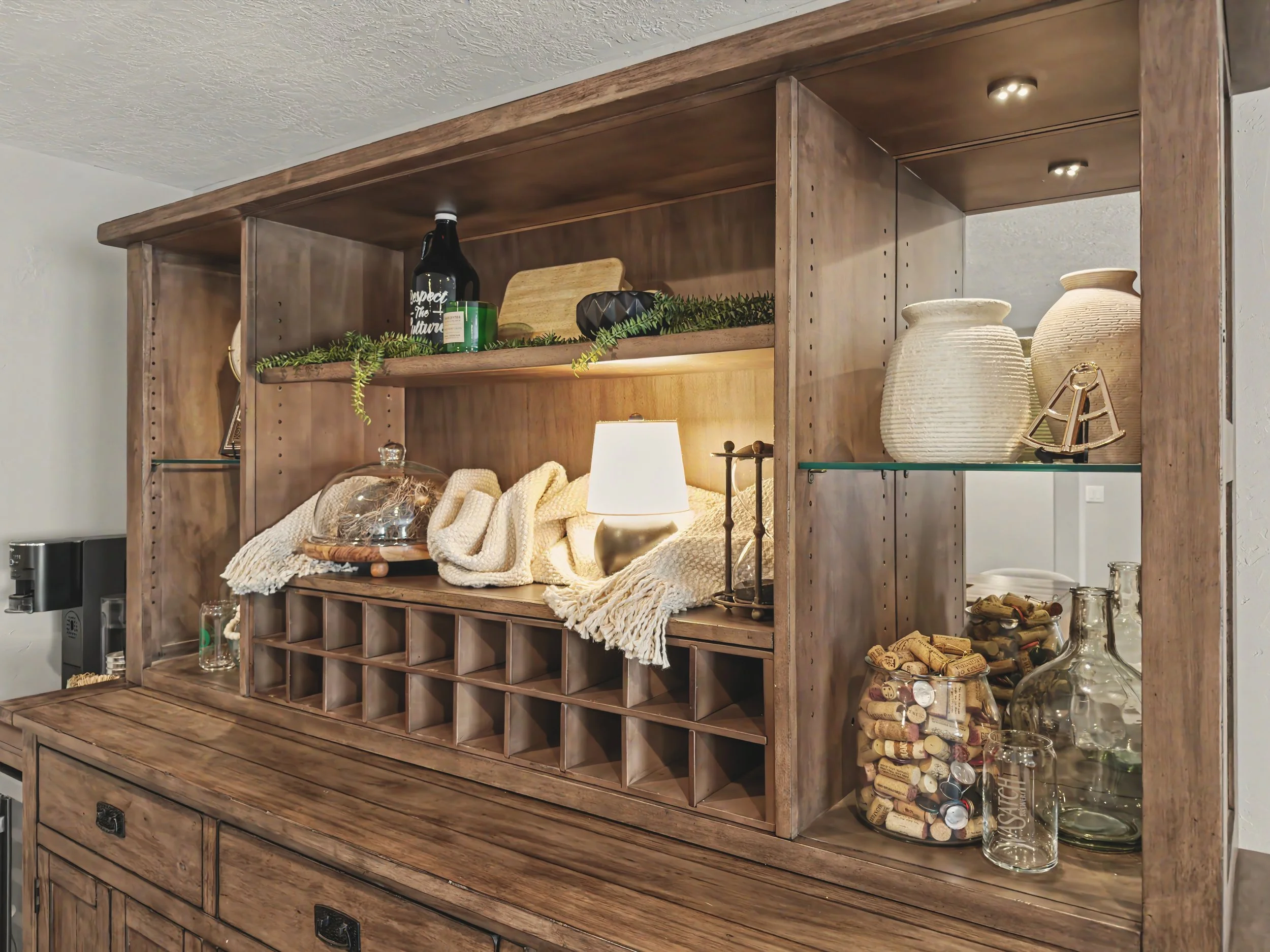
The bar has integrated accent lighting, along with a small lamp tucked among the decorative objects. These softer light sources illuminate individual areas and create visual interest without making the entire basement uniformly bright.
I love the effect of having different parts of a room illuminated at different intensities. It encourages your eye to move through the space and gives even an ordinary evening at home a little more atmosphere.
We still have recessed ceiling lights when we need them, of course. But when it's time to relax, I much prefer the combination of sconces, lamps, and accent lighting.
Collected Details and Unexpected Textures
One of my favorite things about decorating our own home is the freedom to experiment.
I'm not particularly interested in rooms where every accessory looks like it was purchased from the same collection. I prefer spaces that develop some personality through a mixture of old and new, practical and decorative, polished and imperfect.
Our bar is a really good example.
It's a substantial piece of furniture, with plenty of wood grain, storage, and shelving. For years, it was filled with traditional bar ware- various glasses, mixing tools, and alcohol. It was expected and boring, and I wanted to restyle it to feel soft and welcoming. It also gave us a reaon to use the tremendous amount of storage it already provides for all of the bar ware.
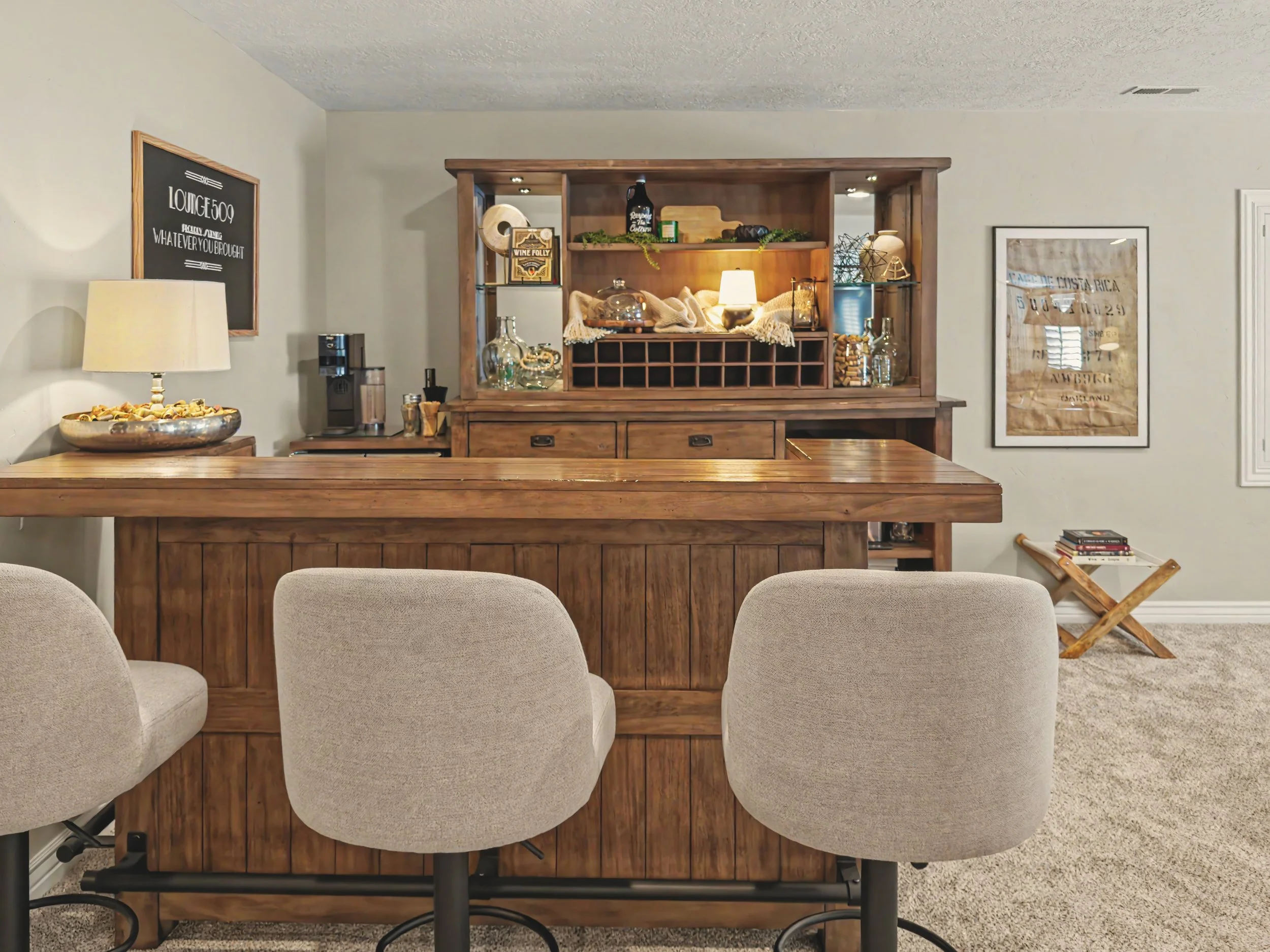
One of my favorite tricks was cramming a textured table runner into the open shelving.
Yes, a table runner.
I wanted to introduce something soft among all that wood and glass, and the woven fabric was exactly the right texture. Rather than laying it neatly across a surface, I gathered and tucked it into the shelving, letting the fabric spill naturally around the other objects.
It's an inexpensive detail, but it adds a surprising amount of warmth.
Another favorite is the framed coffee sack hanging beside the bar.
Years ago, while rummaging through a thrift store with my mother, I came across an old burlap coffee bean bag. I loved the typography, the worn fabric, and the character of the piece, so I brought it home.
Eventually, I had it framed.
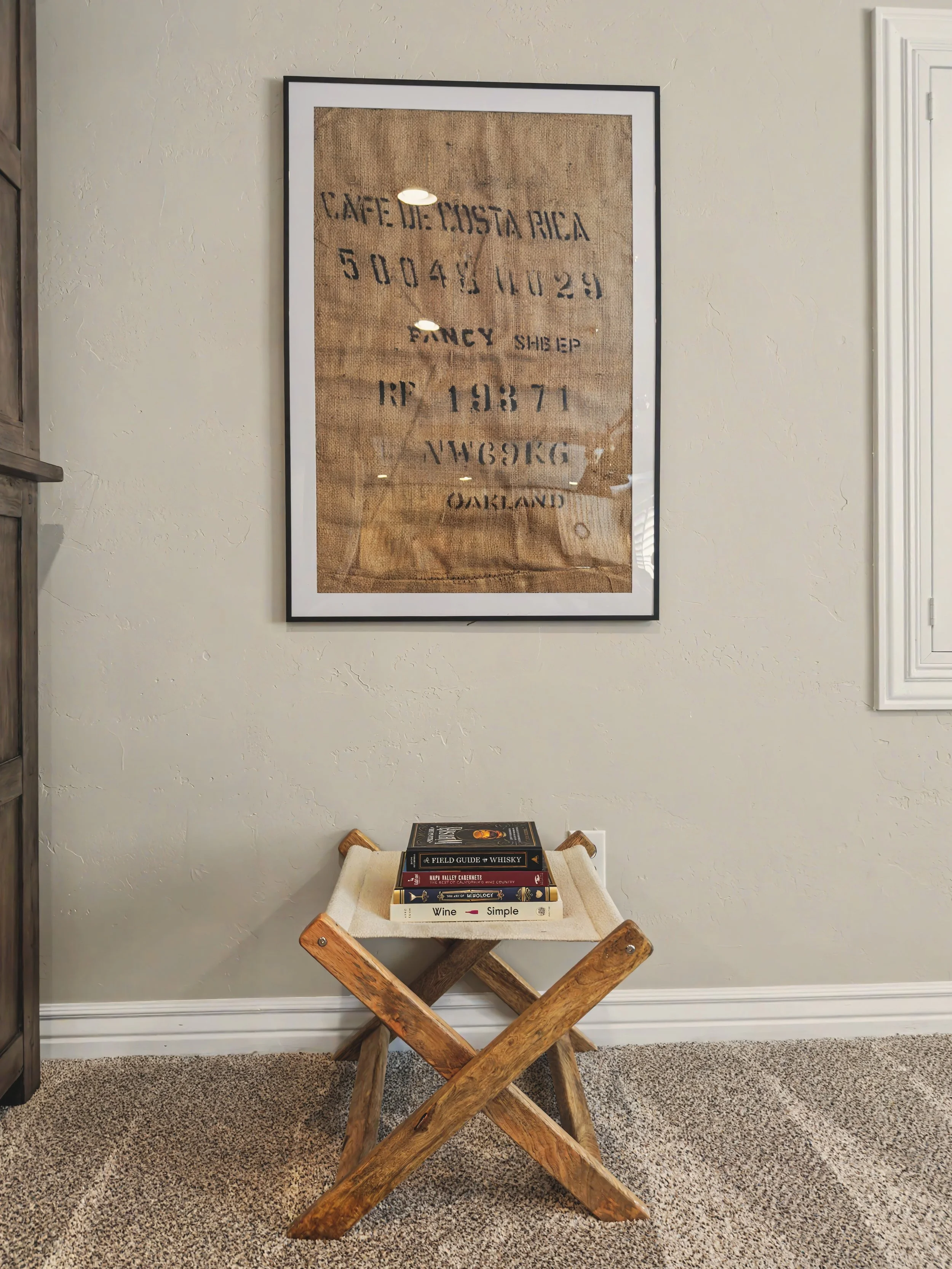
Now it hangs in the basement as a piece of art, and it feels perfectly at home alongside the rustic wood furnishings and other collected objects.
I especially love that it has a personal history. It reminds me of that afternoon spent thrifting with my mother while my boyfriend was out of town. At the time, I didn’t know I’d eventually hang it in the basement we would eventually share with him. Today, we love how it looks in the basement.
Bringing It All Together
Looking around the finished space, I'm glad I resisted the urge to make more substantial changes.
We didn't need to repaint the walls, replace the fireplace, or invest in an elaborate built-in entertainment center.
The existing furniture already provided a strong foundation. What the room needed was a different balance of materials, some thoughtful styling, and a softer architectural focal point.
The drapery wall accomplished more than I initially expected. It brought texture, scale, and a sense of intimacy to the basement, while the lighting helped establish the warm, relaxed atmosphere I'd been imagining.
And although the inspiration came from our love of Napa Valley, the finished space feels distinctly like our home.
It's comfortable, a little rustic, a little contemporary, and filled with things we've collected and enjoyed over the years.
Most evenings, we can turn off the overhead lights, switch on the sconces and accent lighting, settle into the sectional, and enjoy a space that feels removed from the busyness of the day.
That's exactly what I wanted.
At Reclamation Home, I believe thoughtful interior design should reflect the people who live in a space. Whether that means reimagining what you already own, introducing an unexpected material, or finding creative ways to work within a budget, the goal is to make home your favorite place to be.
Explore interior design services at Reclamation Home.